

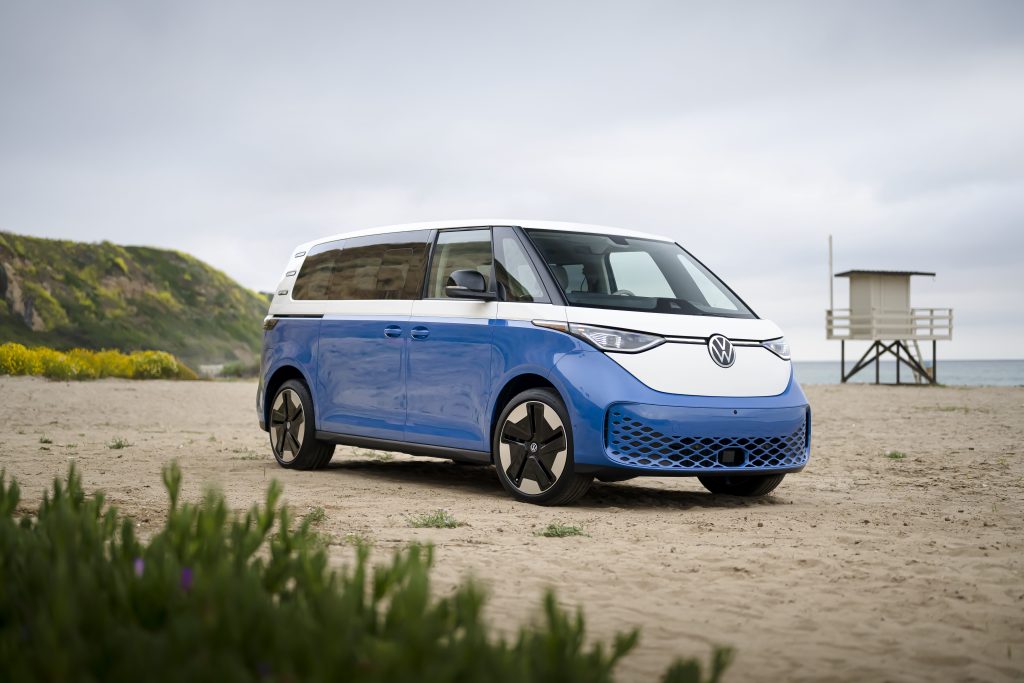
Hey, Volkswagen fans, I’m Lexie and I’m here to tell you about the futuristic VW Microbus! Get ready, because the Volkswagen ID. Buzz is about to electrify your world—literally. This isn’t just any minivan; it’s a revival of the iconic VW Microbus, updated for the 21st century and ready to hit the roads in December 2024 (in the U.S.). Whether you’re a fan of that classic retro vibe or excited about the future of electric vehicles, the ID. Buzz is the perfect blend of both worlds.
Let’s take a closer look at what makes this vehicle buzzworthy!
Throwback Thursday Meets Futuristic Friday
If you’ve ever seen an old-school Volkswagen Type 2 Microbus, you know it’s a symbol of free-spirited adventure. Well, the ID. Buzz takes that nostalgia and adds some serious futuristic flair. It still has that oversized VW logo and short overhangs, but now it’s loaded with tech and eco-friendly features, all wrapped up in a sleek, electric package.
Fun Fact: The T2 ( built between 1967-1979), also known as the “Bay Window” due to its single, curved windshield.
You can even go wild with your choice of color schemes, both inside and out! Who says your car can’t have personality?
Customize Your Buzz
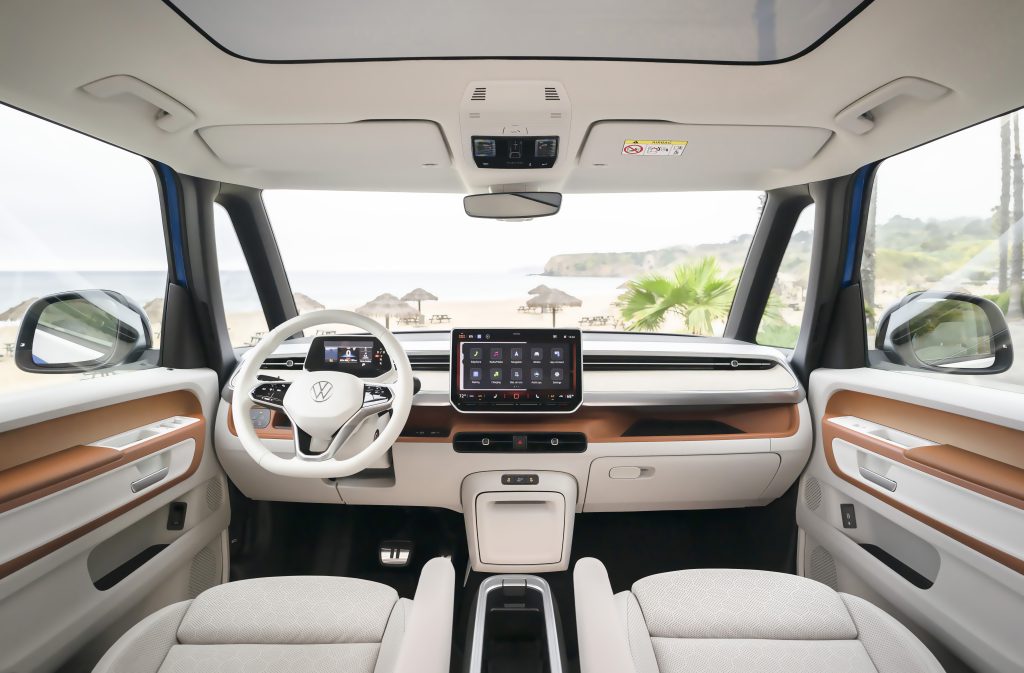
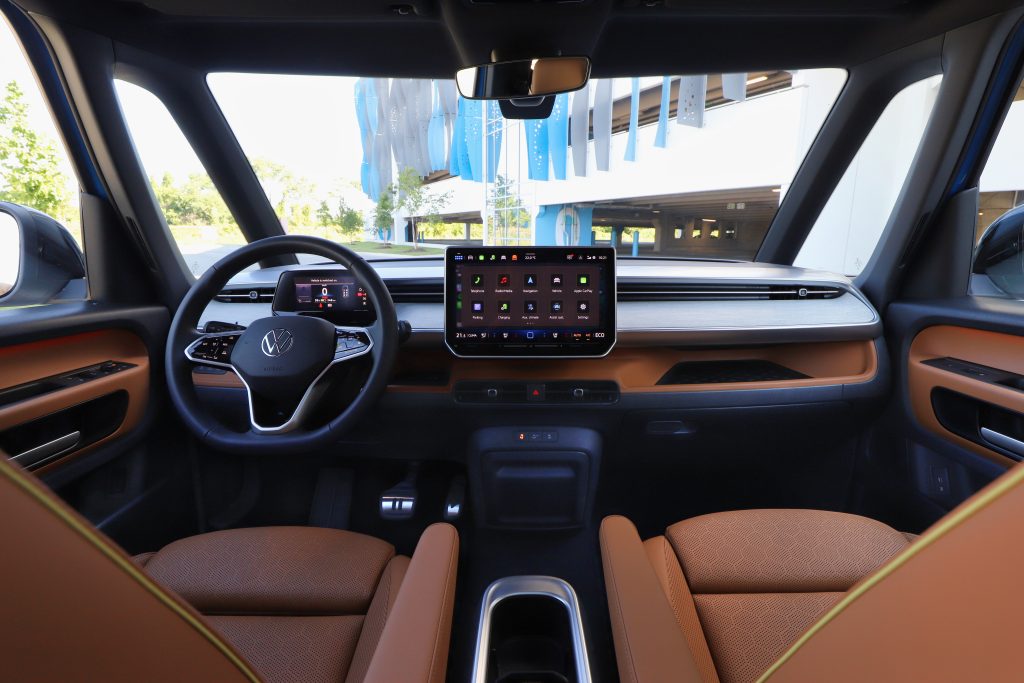
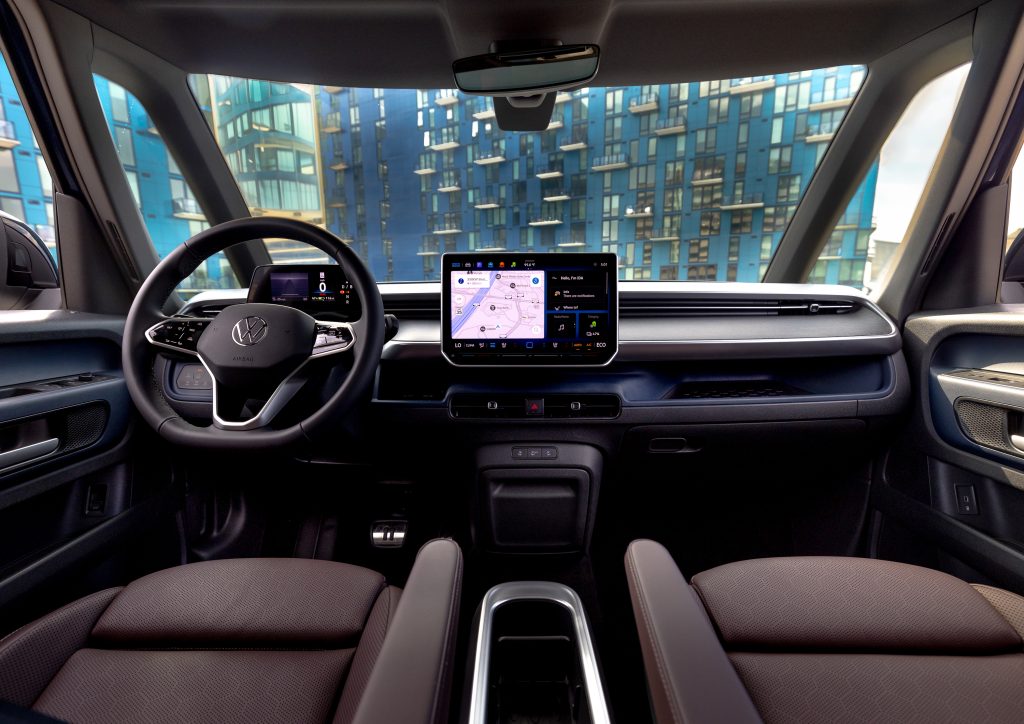
One of the coolest things about the ID. Buzz is that it’s practically a canvas on wheels. The exterior comes in a variety of single-tone and two-tone color options, including eye-catching combos like Candy White with Pomelo Yellow or Metro Silver with Cherry Red.
Did You Know: For those who love to go the extra mile (pun intended), Wrapmate offers custom graphics, so you can give your ID. Buzz that personal flair. With tons of design options you can go wild! (Works for other VW vehicles as well)
Step inside, and it gets even better. Volkswagen has curated three interior color worlds for the North American models: Copper, Dune, and Moonlight. Whether you want mid-century modern vibes with brown leatherette seats and yellow piping (Copper) or a coastal-inspired interior with clay-colored accents (Dune), there’s something for every taste. And if you prefer a moody, darker look, the Moonlight option has you covered with its dark wood-look dash and blue door inserts.
It’s Not Just a Buzzword—It’s a Revolution
Of course, the ID. Buzz isn’t just about looks. It’s part of Volkswagen’s push towards a greener future. The ID. Buzz is 100% electric, which means zero tailpipe emissions. You can drive in style while knowing you’re doing your part to help the planet.
In fact, Volkswagen has gone all out to make sure the ID. Buzz is as sustainable as it is stylish. The van is built in a factory powered by renewable energy, and recycled materials are used throughout the interior. So, whether you’re hitting the highway or just cruising around town, you’ll be reducing your carbon footprint in style.
Ready to Buzz Into the Future?
If you’re as excited about the ID. Buzz as I am, keep your eyes peeled—this retro-futuristic ride is set to hit U.S. dealerships by December 2024. Whether you’re looking for a spacious family van, a customizable adventure-mobile, or just something that turns heads wherever you go, the ID. Buzz has got you covered.
Have questions about the ID. Buzz or ready to reserve yours? Feel free to reach out to me at lexie@mankatomotors.com or give me a call at (507) 344-6984. I’m always happy to help!
In the meantime, keep dreaming about your next road trip—because the future of driving is electric, and it looks amazing.
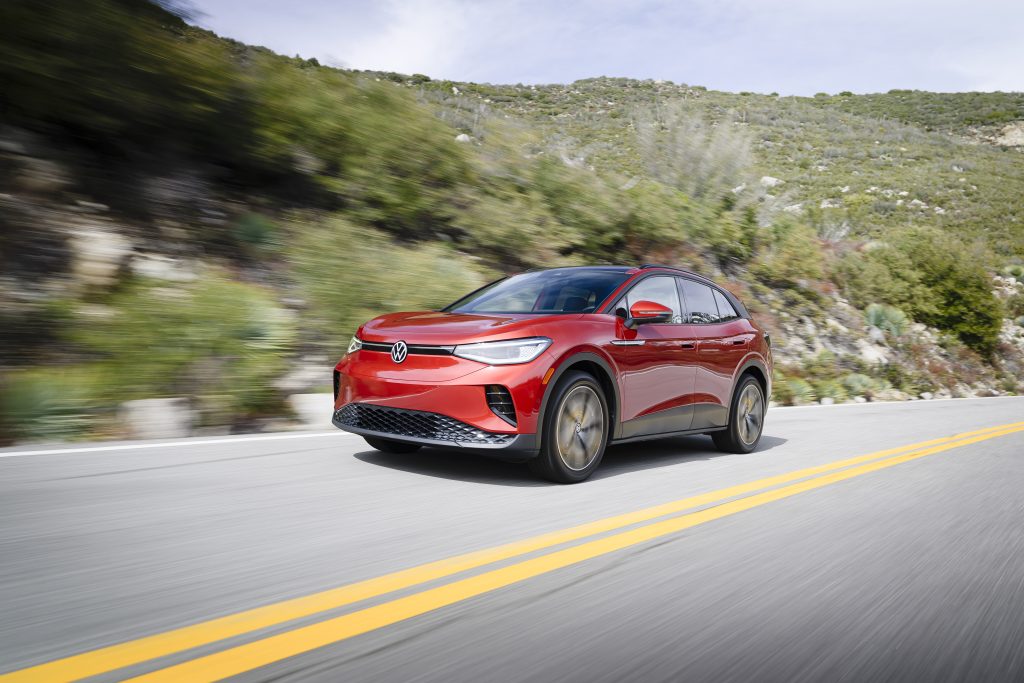
Hello, eco-conscious readers! I’m Lexie, and today I’m excited to share how Volkswagen is making strides to protect our environment. As a Volkswagen enthusiast and representative, I’m here to spread the word about the brand’s commitment to environmental sustainability. If you have any questions or want to learn more, please reach out to me at lexie@mankatomotors.com or call (507) 344-6984. Now, let’s dive into the green initiatives that Volkswagen is pioneering around the globe and here in North America!
Volkswagen’s Green Commitment: The “goTOzero” Mission
Volkswagen Group’s environmental mission statement, “goTOzero,” encapsulates their commitment to reducing the environmental impact of their products and mobility solutions. This mission spans the entire lifecycle of a vehicle, from raw material extraction to end-of-life disposal. The goal? To preserve ecosystems, minimize emissions, and contribute positively to society. The mission is regularly updated to address new environmental challenges and innovations.
Understanding Biodiversity: Why It Matters For You
Biodiversity, the variety of life on Earth, is crucial for the health of our ecosystems. It includes species diversity, genetic diversity, and ecosystem diversity. Conservation projects aimed at protecting biodiversity help ecosystems adapt to environmental changes, provide essential services like clean air and water, and support the balance of our planet.
Volkswagen’s Global Conservation Efforts
Volkswagen is involved in numerous conservation projects worldwide, demonstrating their commitment to protecting biodiversity and ecosystems. Here are some highlights:
- Electrify America Solar Glow™ 1: A 75MW photovoltaic project in San Bernardino County, USA, supporting renewable energy production.
- wpd Wind Farm Aldermyrberget: Located in Skellefteå, Sweden, this wind farm contributes to clean energy solutions.
- Carbon Forest in Poznań: Volkswagen Commercial Vehicles has established this project to offset carbon emissions and support local ecosystems.
- Peatland Protection and River Renaturation: Initiatives in Germany by Volkswagen Financial Services focus on restoring natural landscapes and water systems.
- Green Belt Project in China: Volkswagen Group China works to create green spaces that support local biodiversity.
- Reforesting Efforts in Mexico: In the Iztaccíhuatl-Popocatépetl national park, native plants are being reintroduced to restore natural habitats.
- Dyer Island Conservation Trust Collaboration: In South Africa, Volkswagen supports efforts to protect sharks and penguins, crucial species in the local ecosystem.
Innovative Initiatives: The Chattanooga Solar Park and Sheep
Volkswagen’s solar park in Chattanooga, Tennessee, is a prime example of their commitment to sustainability. This facility, one of the largest at a U.S. auto plant, features a 9.5-megawatt solar system that provides up to 12.5% of the plant’s electricity needs during full production. To maintain the solar farm’s grass, Volkswagen employs sheep, which graze and naturally fertilize the soil, offering an eco-friendly alternative to mechanical mowers. To protect the sheep from predators, “rescue” donkeys are employed as guardians, creating a unique and symbiotic relationship between agriculture and industry.
Fun fact: The herd of 50 some sheep and a few rescue donkeys are actually able to get into the tight spots around the solar panels. Whereas the mowers and weed wackers can not reach some of these spots without potentially damaging the panels or equipment.
Wetlands Restoration and Forest Conservation
In 2009, Volkswagen Chattanooga pledged to restore over 40 acres of wetlands, creating habitats for nearly 200 bird species and other wildlife. Additionally, Volkswagen donated $1.25 million to The Conservation Fund to protect 1,500 acres in the Cherokee National Forest, enhancing wildlife habitats and providing recreational opportunities for the public.
The Vision of the “Zero Impact Factory”
Volkswagen envisions the “Zero Impact Factory,” an idealized factory that operates with minimal environmental impact. This initiative aims to implement climate-friendly, resource-efficient, and environmentally sound production processes across all Volkswagen brands and sites around the world.
How Dealerships Can Go Green
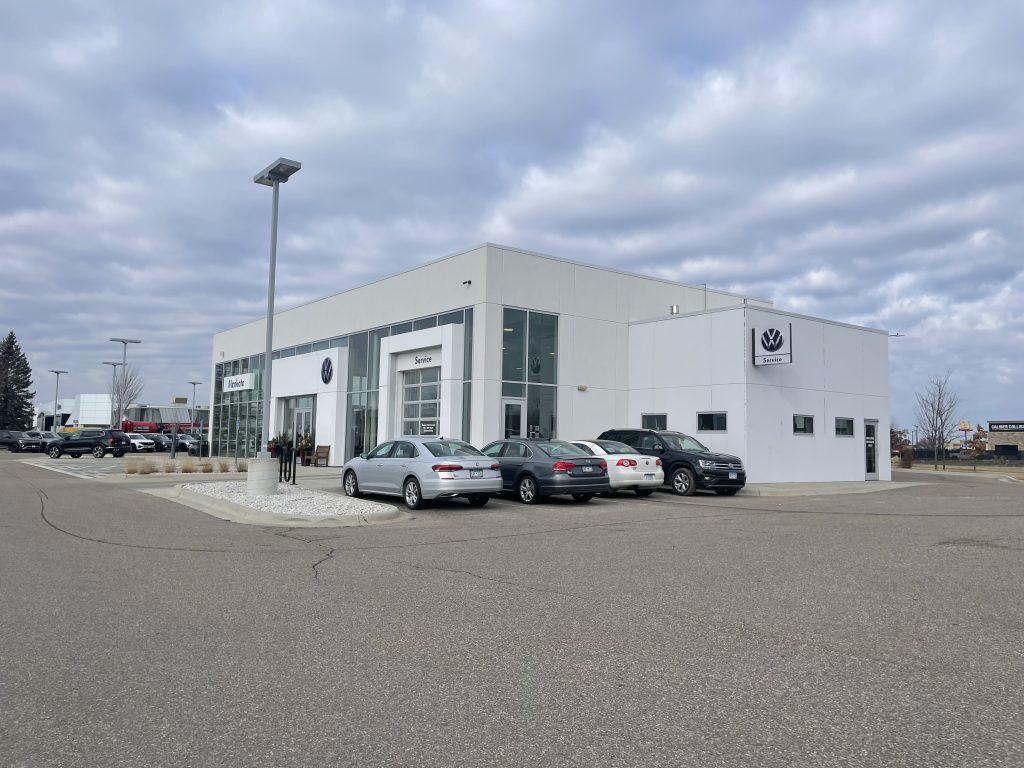
Volkswagen encourages its dealerships to adopt eco-friendly practices, such as:
- Recycling Programs: Setting up recycling bins for batteries, tires, engine oil, antifreeze, and other materials.
- Energy Efficiency: Installing LED lighting and utilizing natural light through skylights and larger windows.
- Water Conservation: Implementing low-flow toilets and faucets, and recycling water in car washes.
- Sustainable Products: Using recycled materials, biodegradable key tags, and other eco-friendly products.
Volkswagen’s commitment to sustainability goes beyond just manufacturing cars; it encompasses a holistic approach to environmental stewardship. From renewable energy projects to wildlife conservation and eco-friendly manufacturing practices, Volkswagen is leading the charge toward a greener future.
For more information or to share your thoughts, please contact me at lexie@mankatomotors.com or (507) 344-6984. Let’s drive towards a more sustainable world together!
Hello, fellow Volkswagen enthusiasts! My name is Lexie, and I’m here to take you on a wild ride through the fascinating and innovative world of Günter Artz and his remarkable creations at Autohaus Nordstadt, at the request of my Uncle Steve. But first, if you have any questions or just want to chat about Volkswagens, feel free to reach out to me at lexie@mankatomotors.com or call (507) 344-6984. Now, buckle up as we delve into the unique legacy of Artz and Nordstadt.
Who Was Günter Artz?
In the 1970s and 1980s, Günter Artz, the ingenious director of Hannover’s Volkswagen dealer Autohaus Nordstadt, took the world by storm with his extraordinary automotive creations. Artz’s vision was anything but ordinary, and his special projects have become the stuff of legend among car enthusiasts and collectors.
Volkswagen Golf Mk1: A Revolutionary Model
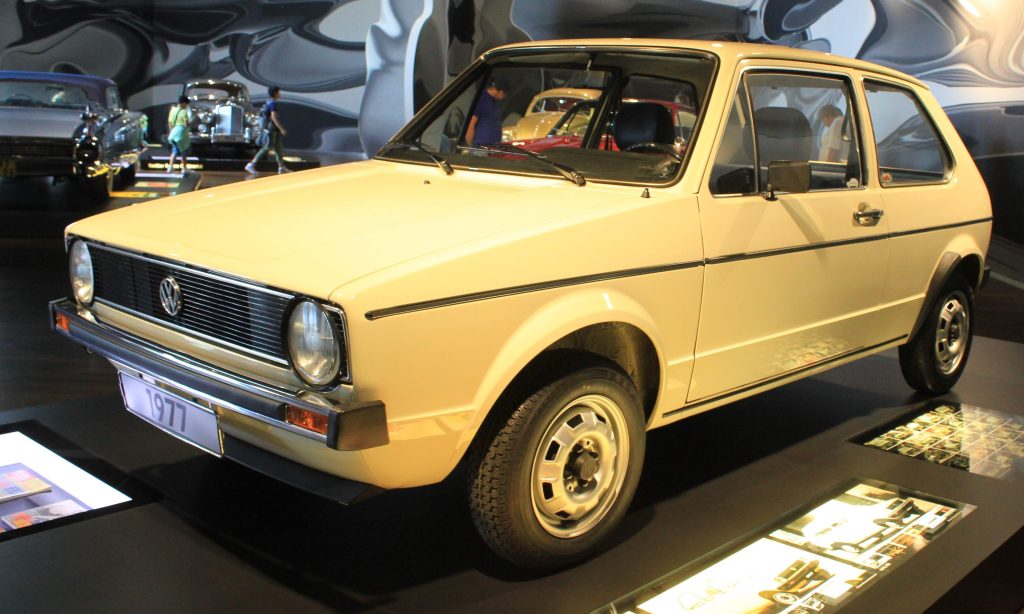
The Volkswagen Golf Mk1, the first generation of a small family car, marked a significant shift for Volkswagen from rear-wheel drive and rear-mounted air-cooled engines to front-wheel drive with front-mounted, water-cooled engines. This revolutionary design paved the way for the incredible modifications by Günter Artz.
The Nordstadt Golf by Artz: The Super Rabbit/ Golf 928
Imagine this: a Porsche 928 disguised as a Volkswagen Golf Mk1. Sounds like something out of a mad scientist’s lab, right? Well, that’s precisely what the Golf 928 by Artz, also known as the Super Rabbit, was. Built in 1979, this beast featured a custom body styled after the Mk1 Golf, widened by approximately 9 inches and lengthened to fit the Porsche chassis. With a 240 bhp engine, it could go from 0-100 km/h in 7.6 seconds and had a top speed of 230 km/h. Depending on who you ask or where you look only around 2-10 of these marvels were ever made, making them rare gems in the automotive world.
Artz Speedster: The Cool Convertible
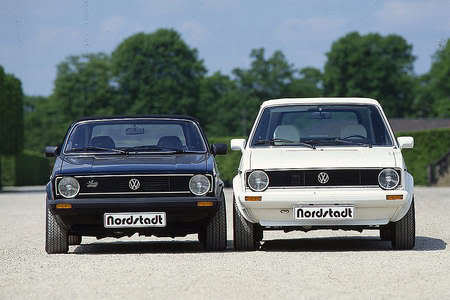
Not one to shy away from a challenge, Artz turned his attention to the Golf Cabriolet. The result? The Artz Speedster, a sleek convertible with a roofline lowered by nearly 4 inches. This stylish modification required custom glass windows and a unique convertible top. Only around ten of these beauties were produced, making them a rare sight.
The Artz Cabrio and SuperCabrio: Jetta on
Artz didn’t stop at the Golf. He transformed the humble two-door Jetta into the Artz Cabrio and SuperCabrio. The Cabrio retained the donor car’s B-pillar, while the SuperCabrio went for a cleaner look by eliminating it. These convertibles showcased Artz’s knack for turning ordinary cars into extraordinary head-turners.
The Famous Golf 928 for Racing Driver Louis Krages
Artz’s creativity knew no bounds. He built a second Golf 928, this time based on the more powerful Porsche 928 S. This special car was bought by Louis Krages, a Le Mans 24-hour race winner who drove under the pseudonym ‘John Winter’. Though Artz envisioned producing more of these masterpieces, only one is believed to have been produced.
The Artz Speedster for Kamei
In 1982, Artz’s talent was recognized by German automotive accessories company Kamei, which commissioned two Artz Speedsters to promote their new X1 body kits. These cars, one painted gold and the other silver, highlighted Artz’s ability to blend style with performance.
More Than Just Golf: The Cordett and Beyond
Artz’s genius wasn’t limited to Volkswagens. He applied his magic touch to various other cars, including the Cordett, which combined the chassis and drivetrain of a 1984 Corvette C4 with a widened and lengthened Opel Kadett body. This unique creation boasted a top speed of 245 kph and a 0-100 kph time of 6.5 seconds.
Why Celebrate Artz and Nordstadt?
Günter Artz and his team at Autohaus Nordstadt exemplify the innovative spirit that Volkswagen enthusiasts adore. Their willingness to push boundaries and create something truly unique reflects the heart of what makes the Volkswagen brand so special.
Whether you’re a fan of classic Volkswagens or just love a good automotive tale, Artz’s creations are sure to inspire. So, next time you’re behind the wheel of your Volkswagen, remember the legacy of Günter Artz and the extraordinary vehicles that dared to be different.
Feel free to reach out to me with any questions or to share your own Volkswagen stories at lexie@mankatomotors.com or call (507) 344-6984. Keep driving and dreaming big, Volkswagen fans!
Hey there, Volkswagen enthusiasts! Lexie here, your friendly neighborhood car aficionado from Mankato Volkswagen. Today, we’re diving into the world of Certified Pre-Owned (CPO) vehicles. What exactly does CPO mean for you, the customer, and your soon-to-be beloved car? Let’s break it down with a dash of humor, a sprinkle of wisdom, and a whole lot of Volkswagen love. If you have any questions or cool VW stories you want to share, you can reach me at lexie@mankatomotors.com or (507) 344-6984.
CPO: The Basics
CPO stands for Certified Pre-Owned. But what does that really mean? Imagine a used car that’s gone through a rigorous boot camp, emerging as the elite among its peers, ready to serve you with reliability and a shiny new badge of honor.
Requirements for Certification
Before a vehicle can join the prestigious ranks of CPO, it must meet several criteria (and each brand will be a little different):
- Age: Typically, the car must be a 2018 or newer model. (No offense to classic car lovers!)
- Miles: The odometer should read under 75,000 miles. Think of it as “lightly seasoned” rather than “well-traveled.”
- Condition: The vehicle must be in good condition before inspection. No major accidents, flood damage, or fire damage allowed—those are deal breakers.
- Vehicle History: Every car has a story, and a CPO vehicle’s story must be clean. We check for any severe damage in its past.
- Intense Inspection: This isn’t your average car wash and polish. Our technicians scrutinize over 100 plus points on the vehicle. Any necessary repairs (generally your normal wear and tear items) are made to ensure it’s in top shape.
The Good, The Bad, and the Ugly of Buying a CPO Vehicle
The Good: Benefits to the Buyer
- Newer Vehicle Without the New Car Price Tag: You get a newer model car without the hefty price tag.
- Low Mileage: Enjoy a vehicle that hasn’t been around the block too many times.
- Better Condition: CPO vehicles are typically in better shape than your average used car.
- Peace of Mind: Thanks to that intense inspection, you can drive confidently knowing your car has been thoroughly vetted.
- Warranty Benefits: Unlike regular used cars, CPO vehicles come with a manufacturer-backed warranty. More on that below!
The Bad, and the Ugly: Things to Consider
- Brand Differences: There is no standard CPO program in the car industry… Each brand has its own CPO program, so it’s wise to do a little homework first.
- Dealer Certified vs. CPO: These are not the same. Dealer certified means the vehicle meets the dealership’s standards, but it’s not backed by the manufacturer like a true CPO.
- Higher Cost: CPO vehicles can cost more than other used vehicles, but you’re paying for the added assurance and benefits.
- Limited Options: The selection of CPO vehicles may be smaller compared to the general used car market.
Volkswagen’s CPO Program

Now, let’s talk about Volkswagen. Our CPO program is designed to give you maximum peace of mind and plenty of perks. But what exactly does that mean for you? Here’s what you get:
Warranty Coverage
- Model Year 2018 and 2019: 1-Year or 12,000-Mile (whichever comes first) Comprehensive Limited Warranty. Repairs covered by this warranty will be performed at no additional charge after a $50 deductible per dealer visit. It’s like health insurance but for your vehicle.
- Model Year 2020 and Newer: 2-Year or 24,000-Mile (whichever comes first) Comprehensive Limited Warranty. Similar conditions apply.
- Electric Vehicles Model Year 2018 and Newer: 3-Year or 36,000-Mile (whichever comes first) Comprehensive Limited Warranty. Repairs covered by this warranty will also be performed at no additional charge after a $50 deductible per dealer visit.
Side Note: Now remember the warranty is added on to what is left of the original warranty. For those of you who are unsure, Volkswagen’s original warranty is 4 years or 50,000 miles. So you start from the vehicle’s original in service date aka its purchase or lease date and add on, depending on where the vehicle falls with age and mileage.
Roadside Assistance
- Two Years of 24-Hour Roadside Assistance: This includes towing to the nearest licensed authorized VW dealership, flat-tire changes, and jump starts. Roadside assistance is provided by a third party and may require additional payment for services rendered.
CARFAX® Vehicle History Report
- CARFAX® Vehicle History Report: Every CPO Volkswagen comes with a CARFAX report. While Volkswagen doesn’t warrant the accuracy of these reports, they provide valuable insight into the vehicle’s history.
SiriusXM®
- Three Months of SiriusXM®: If your CPO vehicle is SiriusXM® equipped, you’ll enjoy three months of premium programming at no additional charge. (Because what’s a road trip without some great tunes?)
100+ Point Dealer Inspection
- Comprehensive Dealer Inspection: This includes checking the engine, transmission, brakes, steering, and more to ensure your Volkswagen meets our high standards.
Conclusion
Buying a CPO vehicle is like getting the best of both worlds: the assurance of a new car and the savings of a used one. With Volkswagen’s CPO program, you can hit the road with confidence, knowing your vehicle has been thoroughly inspected and comes with robust warranty coverage.
Have more questions? Feel free to reach out to me, Lexie, at lexie@mankatomotors.com or (507) 344-6984. Happy driving!
Hey there, fellow road trip enthusiasts! Lexie here, your trusty guide to all things Volkswagen and epic road trips. Whether you’re behind the wheel of a classic VW Bus or the latest VW ID. 4, the Midwest has some truly spectacular destinations for you to explore. So buckle up, pack your sense of adventure (and humor), and let’s dive into some amazing road trips you can take with your Volkswagen this year!
1. The Majestic North Shore (Minnesota)
Route: Start your journey in Duluth, MN, and wind your way up to Grand Portage, MN, hugging the stunning shores of Lake Superior. Take your time and stop and explore the towns, attractions, and state parks along the way, make it a trip to remember!
Highlights:
- Gooseberry Falls State Park: Perfect for those Instagram-worthy waterfall shots.
- Split Rock Lighthouse State Park: Because every road trip needs a lighthouse selfie.
- Grand Marais: A charming town with quirky shops and beautiful shores. Don’t forget to explore the marina!
Best Time to Visit: Winter for snowy magic or May and June for blooming beauty. Go camping or stay in the cabins and inns along the way!
2. Black Hills Bliss (South Dakota)


Route: Begin your exploration in Rapid City, SD, and create a giant loop around the Black Hills. With so much sightseeing to do, you will have a fun action packed adventure ahead of you! Bring your camera and hiking boots to capture epic photos and look out for the many wildlife you will see (but stay a safe distance anyway from wild animals…they are not your friends).
Highlights:
- Crazy Horse Memorial: Take a hike and witness a work in progress that’s both impressive and humbling.
- Custer State Park: Say hello to bison (do not touch) and take a scenic drive through the park.
- Jewel Cave National Monument: Sparkling, mysterious, and just a tad spooky.
Best Time to Visit: Summer, when the hills are alive with color and critters. Campout or stay in some of the neat little towns along the way, and find some fascinating hidden gems. While you are at it stop and do some gold mining in Keystone, SD, a fun experience for kids and adults alike!
3. Historic Route 66
Route: The Mother Road, a legendary road trip, starts in Chicago and ends in Santa Monica, CA. The historic route takes you on many twists and turns through small towns, where you can find many original buildings from the first Route 66. Take your VW, camera, and lots of snacks and head out to find all the route 66 destinations.
Highlights:
- Chicago: Grab a deep-dish pizza and hit the road and don’t forget to take a selfie at the Route 66 begin sign!
- St. Louis: Head to the Chain of Rocks Bridge and go for a walk on the old route 66, but don’t miss the Gateway Arch when you are done.
- Santa Fe: Art, culture, and fantastic food. Drive through the historic downtown and check out the Santa Fe trail that Route 66 once followed.
Best Time to Visit: Late spring/early summer or early fall for perfect road-tripping weather. Drive this historic route with the windows down!
4. Sleeping Bear Dunes National Lakeshore (Michigan)
Route:Take a drive along Michigan’s Lower Peninsula along the northeast shores of Lake Michigan. Take a trek along the shores of Glen Lake or head over to the Sleeping Bears Overlook! And if you are feeling adventurous head out to South and North Manitou Islands for some great hiking and photos.
Highlights:
- Pierce Stocking Scenic Drive: Grab your VW and go for a drive for some stunning views and perfect picnic spots!
- The Dune Climb:Get your workout in and enjoy the view from the top of the sand dune.
- Hiking Trails: From the short and sweet Empire Bluff Trail to the adventurous Alligator Hill Trail.Take in the scenery, take a deep breath and relax out in nature.
Best Time to Visit: Summer for tons of family fun, or spring and fall for a quieter, romantic getaway just for two.
5. Mackinac Island (Michigan)
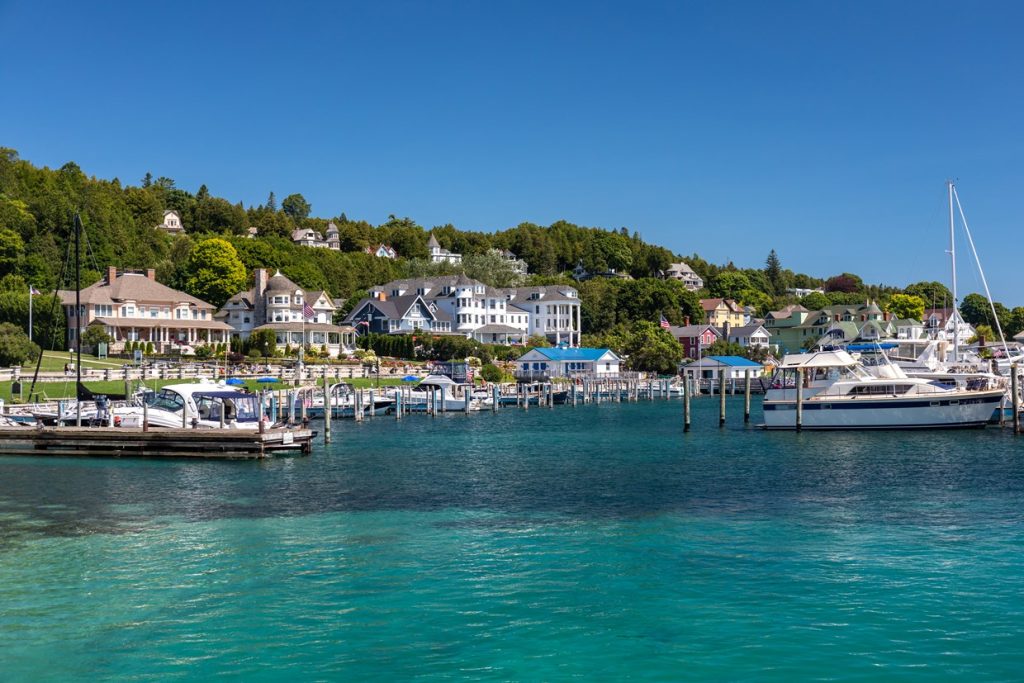
Location: Take a step back and relax and head to this interesting and historic island. Mackinac Island takes you a step back in time with horse drawn carriages, historic forts, and homes to explore. It’s an adventure for the whole family! Explore the island on foot, water, or by air there is always something to do.
Highlights:
- Fort Mackinac: Step back in time with historic reenactments in this historic fort.
- Arch Rock: Hike out or take a boat. It’s a natural wonder you can’t miss.
- Getting Around the Island: No cars allowed so you will have to leave the VW at the docks! Pedal power is the way to go here…or horse depending on what you prefer.
Best Time to Visit: Summer or fall for the best weather and most activities. This Island offers adventures for all ages, whether it’s just the two of you, or the whole family there is something for everyone.
6. The Great River Road
Route: Follow the Mississippi River from start to finish! Head out to Itasca State Park and follow the River all the way to the Gulf of Mexico. Take the National Scenic Byways, drive through ten different states, and watch as the scenery changes on your way down!
Highlights:
- Scenic Byways: Drive your Volkswagen through gorgeous views at every turn, With an amazing view of the Mississippi as it makes its way down to the Gulf.
- Historic Sites: Discover America’s heartland history and how the Mississippi shaped the towns and cities to what we know today.
- Wildlife Galore: Keep your eyes peeled for eagles, deer, otters, bobcats and maybe even an armadillo.
Best Time to Visit: Fall or spring to catch the foliage and avoid the heat. Head out on this journey to discover the history of the Mississippi RIver, and all the different sites along the way.
7. Indiana Dunes National Park and State Park (Indiana)
Route: Head out to the beach and take a trip around the southernmost edge of Lake Michigan. Whether you are looking to take in the sites, have fun at an amusement park, or just relax on the beach has a bit of everything!
Highlights:
- Hiking and Beaches: Pull that Volkswagen out of the driveway and head to the beaches and dunes of the National Park. Perfect for nature lovers and those looking to relax on the beach.
- Six Flags Amusement Park: For the adrenalin enthusiasts or kids (and kids at heart) this massive amusement park is for you. Between roller coasters, waterparks, and entertainment, it’s an action packed day for everyone!
- Chicago: Take a city tour of some of the amazing sites, architecture, and culinary attractions that Chicago has to offer. Don’t forget to get that selfie at the Cloud Gate (The Bean)!
Best Time to Visit: May through September for the best weather if you want to hit the beaches or water parks! Campout at the National Parks or stay in some quaint inns around Lake Michigan and take in the site and scenery around you!
Ready to hit the road and pack your gear? Grab your keys, your sense of adventure, and your favorite Volkswagen, and let’s make some memories. If you have any questions or need more tips, feel free to reach out to me, Lexie, at lexie@mankatomotors.com or call me at (507) 344-6984. Happy travels!
Hello, fellow Volkswagen enthusiasts! I’m Lexie, your friendly neighborhood VW aficionado from Mankato Motors. Today, we’re diving into the iconic world of Volkswagen camper vans, specifically the iconic Westfalia Camper. So, grab a large cup of coffee, sit back, and let’s take a whimsical ride through the history and evolution of this beloved vehicle. If you have any questions or just want to share your own VW stories, feel free to reach out to me at lexie@mankatomotors.com or call (507) 344-6984.

The Birth of a Legend: The Volkswagen Type 2
Our story begins with a Dutchman named Ben Pon, who, in 1947, doodled a sketch that would forever change the landscape of road trips. This sketch laid the foundation for the Volkswagen Type 2, also known as the Transporter, Kombi, Microbus, or simply, the Bus. Following the success of the Beetle (Type 1), the Type 2 hit the streets in 1950 and quickly became a symbol of freedom and adventure.
First Generation: The T1 (1950-1967)
The T1, affectionately known as the “Splitscreen” or “Microbus,” was the first in a long line of iconic Volkswagen vans. Produced from 1950 to 1967, the T1 featured that very distinctive split windshield and a rear-mounted, air-cooled engine. It became the quintessential hippie van, synonymous with the counterculture movement of the 1960s. One standout model was the luxurious Volkswagen “Samba,” complete with extra windows and a sunroof, perfect for stargazing or letting in the sunshine.
Did you know: That some models of the VW bus played a role in the 1960’s Chicken War? The Chicken war came about when France and West Germany placed high tariffs on imported US chicken. Then in 1964 the US government placed tariffs on imported goods from Europe, which included light vans/trucks and brandy. This is one of the reasons why we do not see any of Volkswagens trucks or campervans in the US today.

The Evolution Continues: T2 to T6
The T2 (1967-1979), also known as the “Bay Window” due to its single, curved windshield, marked the beginning of a new era. It was longer, more powerful, and even safer than its predecessor. The T3 (1979-1990), or “Vanagon” in the U.S., introduced more space and the option of a water-cooled engine, making it a versatile family vehicle, perfect for those long road trips.
Then came the T4 (1990-2003), marketed as the EuroVan in North America. This model transitioned from rear-engine to front-engine, bringing more modern amenities and improved handling. The T5 (2003-2015) and T6 (2015-present) continued to innovate, though they never quite captured the U.S. market due to import tariffs (the Chicken tax).

The Westfalia Camper: Home on Wheels
The Westfalia Camper, a specialized version of the Transporter, has been transforming road trips into memorable adventures since the early 1950s. Originally modified by Westfalia-Werke, these campers were equipped with foldout beds, kitchenettes, and pop-up roofs, turning the humble van into a mobile home.
- Standard Equipment: Foldout sleeping arrangements, plywood cabinetry, ice box, sink, water pump, curtains, and a folding table.
- Optional Equipment: Pop-up tops with canvas sides, awnings, side tents, portable toilets, camping stoves, and more.
From the T1’s “Camping Box” to the more sophisticated setups in later models, Westfalia campers provided the perfect blend of practicality and charm leaving a lasting impression. They were a hit with travelers, outdoor enthusiasts, and families alike! Who wouldn’t want to just jump into a campervan and travel all over the US.
Fun Fact: The Tourist Delivery Program. During the 1950’s-1960’s a customer could purchase a van in Germany and drive it around Europe. Then VW would ship it to the customer’s home! This sounds like a lot of fun and I for one would be on board to try this out.
The Modern Era: Volkswagen California
Fast forward to the 21st century, and Volkswagen decided to take camper production in-house. Enter the Volkswagen California, based on the Transporter van. Launched in 2003, it carried on the tradition of its predecessors while introducing modern comforts and technology. The California has since evolved, with the larger Grand California and the smaller Caddy California joining the lineup. Despite the name you will not actually find any of these camper vans in the US, unless they were imported in. Personally, I think Volkswagen should bring the camper vans back to the US, but that is just me.
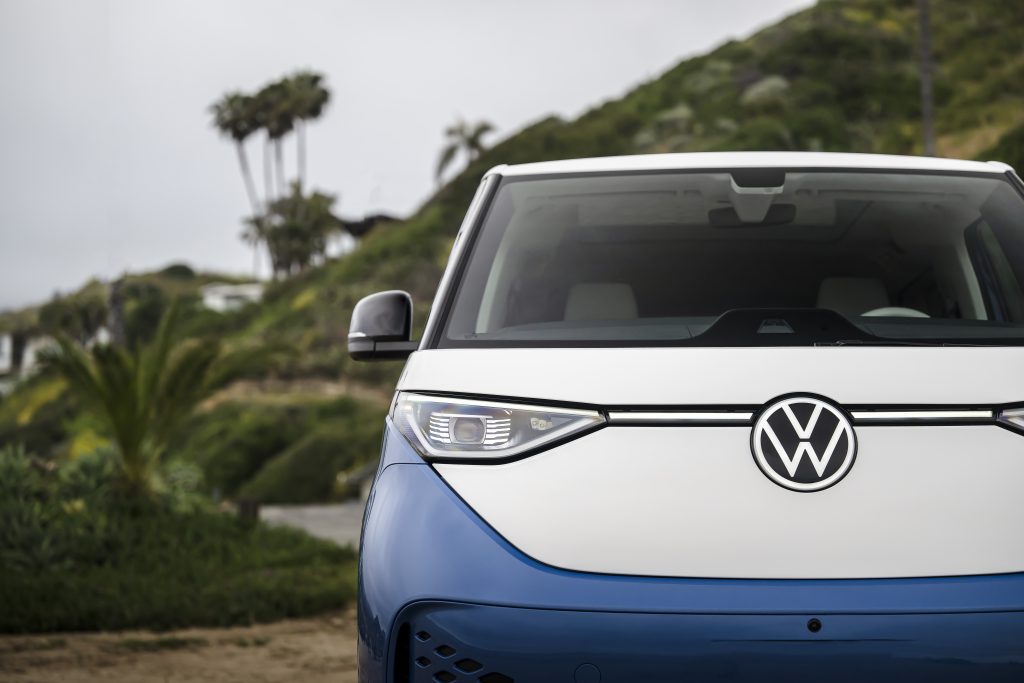
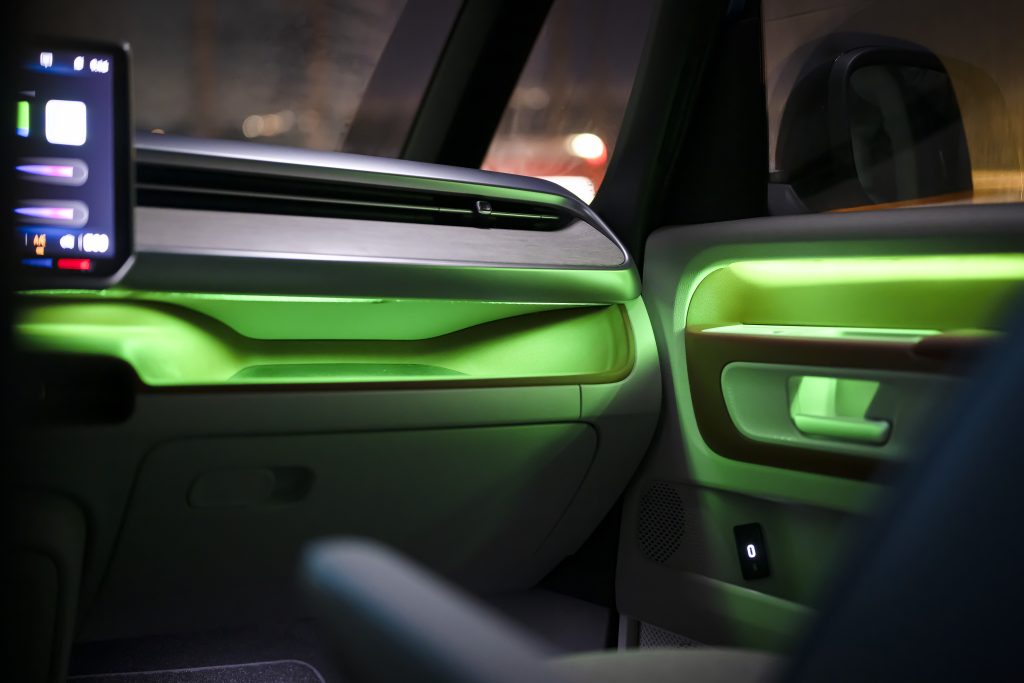
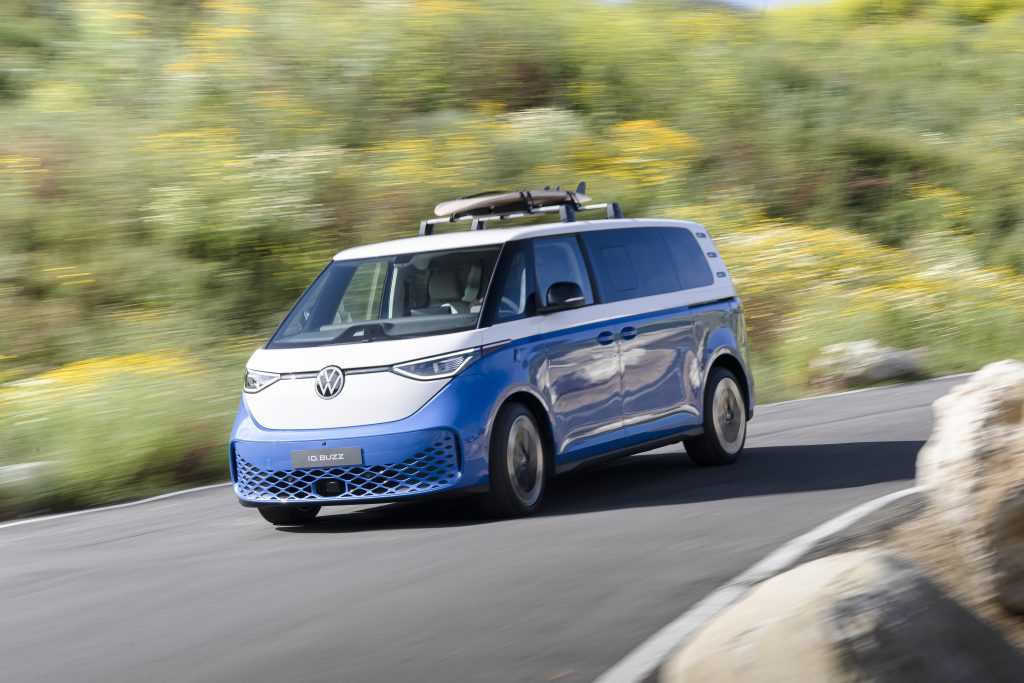
A Nod to the Future: The I.D. Buzz
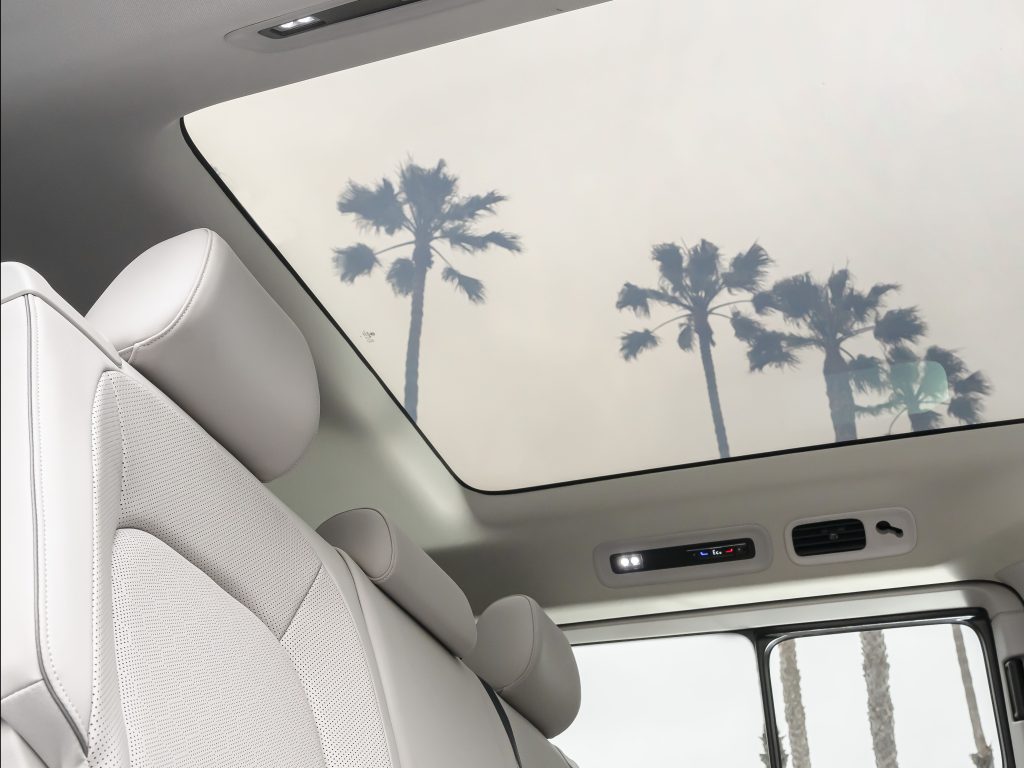
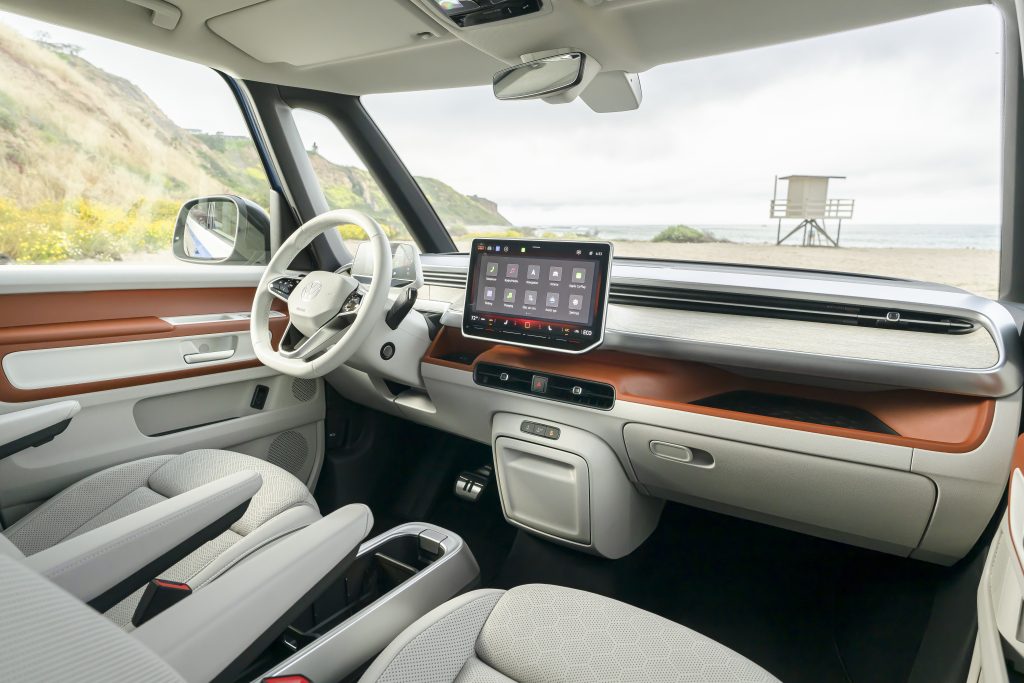
Volkswagen is set to electrify the van world with the I.D. Buzz, an all-electric homage to the classic Microbus. Expected to hit the roads in 2022 (Europe), this futuristic vehicle promises to blend nostalgia with cutting-edge technology, paving the way for a new generation of eco-friendly adventurers.
The US will start seeing the I.D. Buzz by the end of the year finally! Maybe VW will make a camper van version of the I.D. Buzz, who knows! We will have to wait and see what the future brings.
Join the Volkswagen Adventure!
Whether you’re a nostalgic fan of the classic Splitscreen or eagerly awaiting the electric I.D. Buzz, Volkswagen’s camper vans have a rich history of adventure, innovation, and community. So, what’s your favorite Volkswagen campervan story? I’d love to hear from you!
Feel free to contact me, Lexie, at lexie@mankatomotors.com or give me a call at (507) 344-6984. Let’s keep the spirit of the open road alive, one VW story at a time.
Hey there, fellow road warriors! It’s Lexie here, and today I want to introduce you to Volkswagen’s IQ.DRIVE—a suite of advanced driver-assistance technologies. With this tech by your side it’s like having a co-pilot who never gets tired or distracted. Whether you’re navigating busy streets, cruising on the highway, or reversing out of a tight spot, IQ.DRIVE is designed to make your drive safer and more convenient. And let’s face it, who couldn’t use a little extra help on the road these days? Let’s dive into the cool features that make IQ.DRIVE a must-have for every Volkswagen driver.

Lane Assist: Your Invisible Lane Buddy
Imagine this: You’re driving along, singing your heart out to your favorite tunes, and suddenly your car starts to drift toward the center lane. No worries! Lane Assist is here to keep you in check. If you start to veer without signaling, Lane Assist gently nudges you back on track and even gives the steering wheel a little shake if you don’t correct your course. It’s like having a friend or partner who taps you on the shoulder and says, “Hey, pay attention to the road!”
Emergency Assist: Because Life Happens
Let’s hope you never need it, but Emergency Assist is there just in case. If it senses that you’re not actively steering—maybe you dozed off or are incapacitated due to a medical emergency—it sounds alarms and, if you still don’t respond, it will safely bring your car to a stop and put the hazards on. It’s the guardian angel you didn’t know you needed.
Side Note: Lane Assist does need to be enabled for emergency assist to function properly.
Adaptive Cruise Control (ACC): Smooth Operator
Traffic can be a nightmare, but ACC is here to keep your blood pressure in check. It maintains your set speed and adapts to the traffic flow by keeping a safe distance from the car ahead. No more constant braking and accelerating—ACC does it all for you. You just need to set the distance you want to keep with the vehicle in front of you. It’s like having a traffic-savvy butler at your service.
Active Blind Spot Monitor: The Watchful Eye
Ever had that heart-stopping moment when you almost change lanes into another car? Active Blind Spot Monitor has your back—literally. It alerts you if there’s a car in your blind spot and can even counter-steer to prevent a collision. Think of it as having an extra pair of eyes that never blink or Santa Clause because he is always watching.
Rear Traffic Alert: Reverse with Confidence
Backing out of a driveway or parking spot can feel like you’re flying blind, especially when you are surrounded by bigger vehicles, but not with Rear Traffic Alert. It watches for vehicles crossing behind you and will even hit the brakes if a collision is imminent. Heading out to mall or sports events just got a whole lot less stressful!
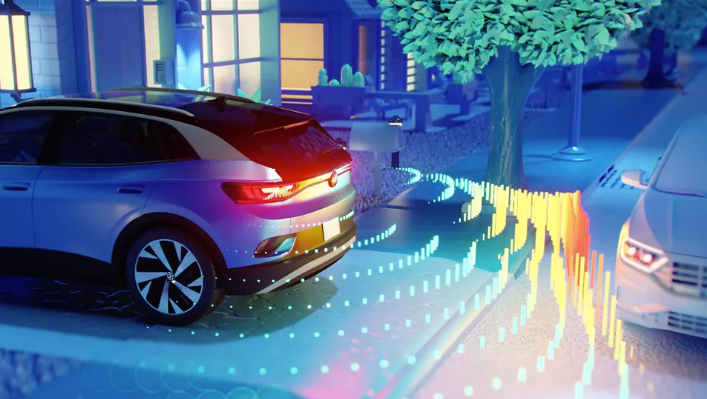
Front Assist: Your Forward Scout
Front Assist is like having a scout up ahead, warning you of potential collisions with cars, pedestrians, or cyclists. It alerts you and, if needed, applies the brakes to mitigate or avoid an accident. Perfect for those sudden stop-and-go situations…it also helps when pulling into your garage.
Travel Assist: The Road Trip Buddy
Long drives can be exhausting, but Travel Assist combines the best of Adaptive Cruise Control and Lane Assist to keep you centered in your lane and at a safe distance from other vehicles. It’s designed to reduce fatigue, making those road trips more enjoyable and less tiring.
Side Note: This feature will not drive the car for you. The vehicles are not that smart yet.
Real-Life Scenarios Where IQ.DRIVE Shines
- Unintentional Lane Drift: Lane Assist keeps you safely in your lane…even when you are trying to grab your coffee cup.
- Vehicles hovering in your blind spot: Active Blind Spot Monitor alerts you to those hidden vehicles.
- Reversing Safely from a parking spot: Rear Traffic Alert prevents backing into crossing traffic…like the parking lots at Walmart or Target.
- Incapacitated Driver: Emergency Assist safely stops the vehicle.
- Stress-Free Commutes: Adaptive Cruise Control handles the stop-and-go…handy during road construction season.
- Collision Prevention: Front Assist brakes to avoid or reduce impact…because there are some questionable drivers on the road.
- Long Drives: Travel Assist helps maintain focus and reduces fatigue…long road trips just got a little easier.
Limitations to Keep in Mind
While IQ.DRIVE is amazing, it’s not perfect. It relies on clear sensor data, so dirty or broken sensors, poor weather conditions, and unclear lane markings can affect performance. And remember, it’s not a substitute for attentive driving—keep your hands on the wheel and stay alert.
Ready to Experience IQ.DRIVE?
IQ.DRIVE is now standard on most 2024 Volkswagen models, making it easier than ever to drive with confidence. Whether you’re navigating city streets or embarking on a cross-country adventure, IQ.DRIVE is the co-pilot you can count on.
Got questions? I’m here to help! Contact me at lexie@mankatomotors.com or call (507) 344-6984. Let’s take your driving experience to the next level with Volkswagen’s IQ.DRIVE!
Hi everyone! I’m Lexie, a Volkswagen enthusiast on a mission to expand your knowledge and love for the Volkswagen brand. Today, we’re diving into the world of the Volkswagen Tiguan—a vehicle that combines style, performance, and cutting-edge technology in one fantastic package.
For any questions, feel free to contact me at lexie@mankatomotors.com or call (507) 344-6984. Let’s go ahead and drive into the Tiguan!

A Legacy of Excellence
Since production began in 2007, the Tiguan has sold over six million units worldwide, with 910,926 units manufactured in 2019 alone! It’s the best-selling Volkswagen model in the U.S. and a top SUV in Europe, proving its global appeal and reliability. This SUV is something you definitely don’t want to miss out on!
Did you Know: The Tiguan originally was sitting between the Touareg and the T-ROC in the VW lineup.
First Generation: The Beginning 2007-2016
The Tiguan made its debut as a concept vehicle at the LA Auto Show in 2006 and officially launched in Europe in 2008. Initially available with a 2.0-liter TDI and a 1.4-liter TSI engine, the first-generation Tiguan quickly became popular worldwide, even winning a naming contest held by German car magazine Auto Bild.
Fun Fact: The name “Tiguan” cleverly combines “tiger” and “iguana,” symbolizing strength and agility.

Did you Know: This versatile SUV is generally considered to be a medium-sized SUV in Europe, while here in the US it is considered to be a compact crossover. To be fair we tend to like our SUV’s big here in the U.S.
Second Generation: 2016-Present
The second-generation Tiguan arrived in 2016, boasting improved interior space and new tech features. This generation introduced the long-wheelbase Tiguan Allspace (independent from the Tiguan), offering three-row seating for larger families. The 2020 update brought redesigned headlamps, a new multifunction steering wheel, and Volkswagen’s IQ.DRIVE® technology, enhancing safety and convenience.
Fun Fact: Volkswagen has had a few special edition Tiguans over the years like the Tiguan Silk Road and the Tiguan Limited.
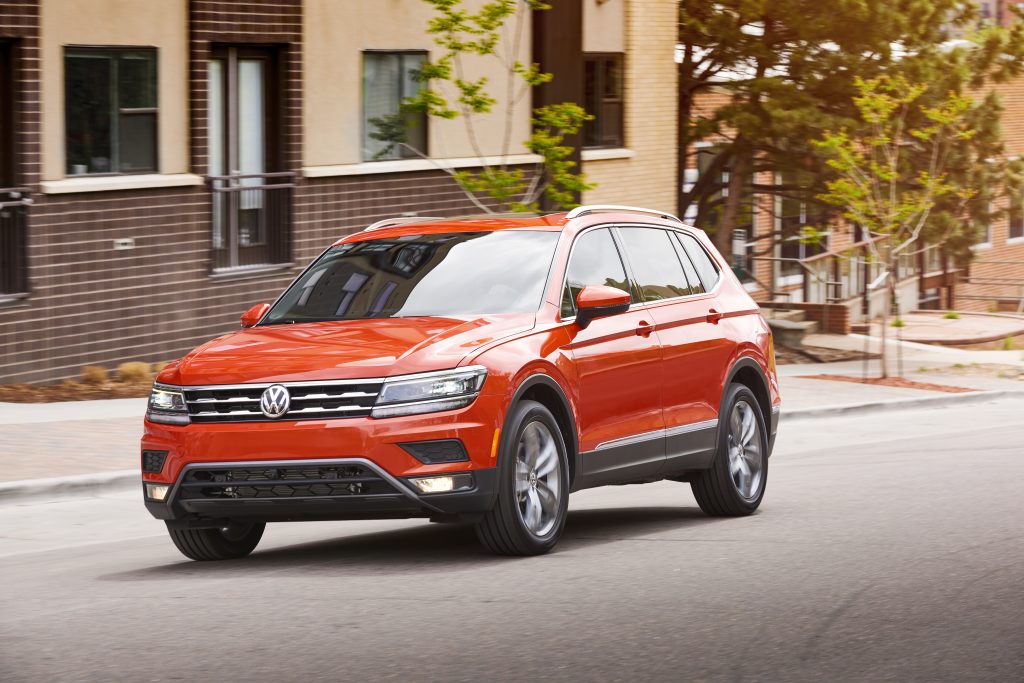
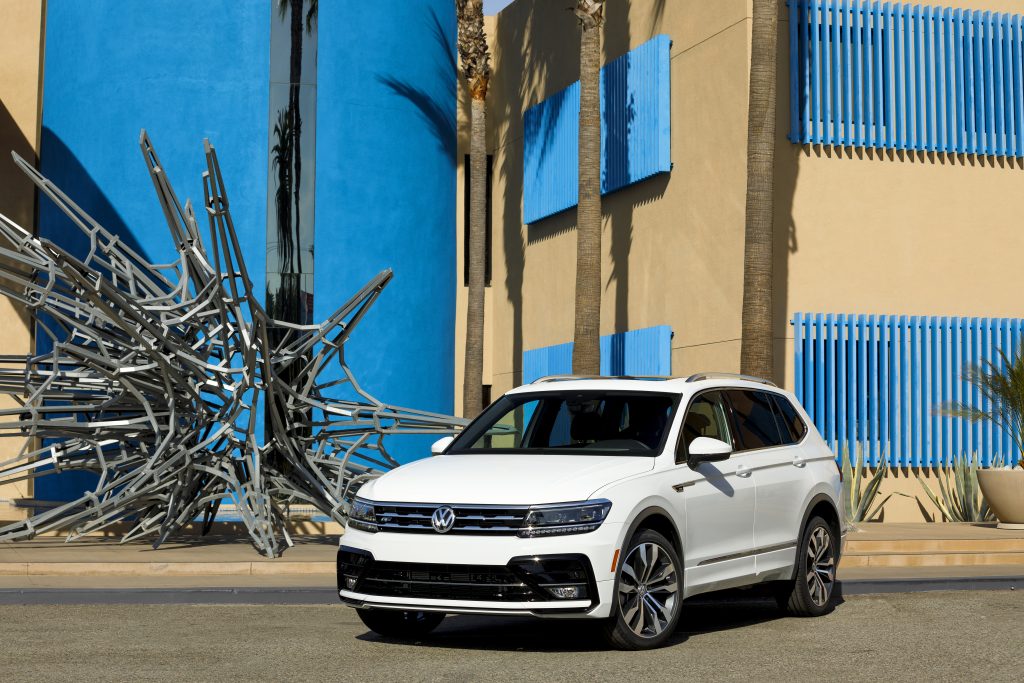
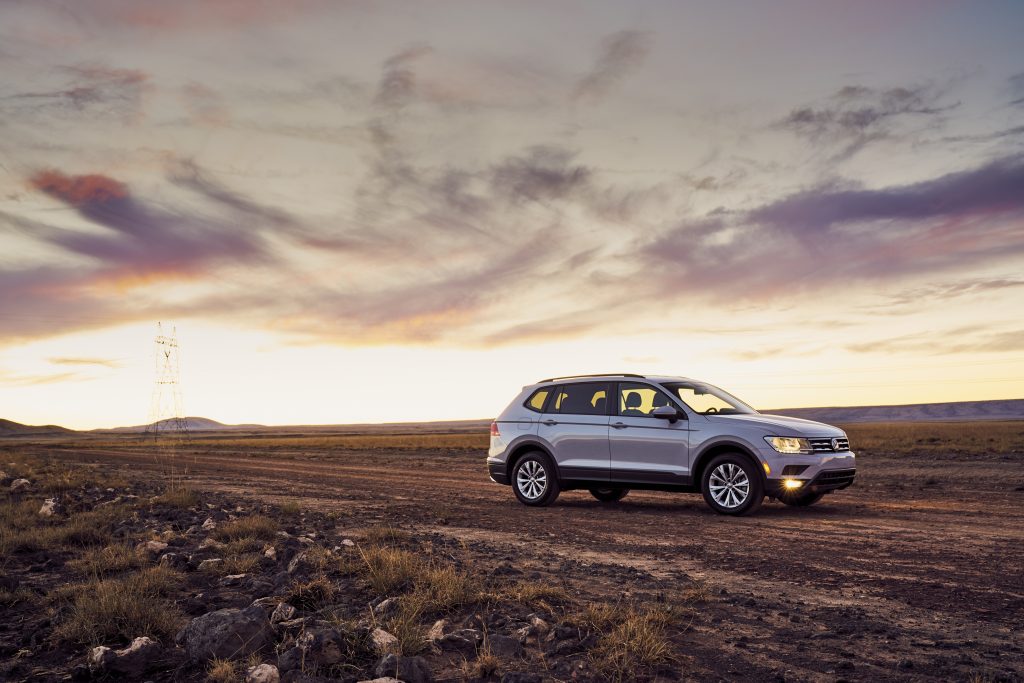
Third Generation: 2024 and Beyond
The latest Tiguan models continue to impress with advanced features and a sleek design. The 2024 Tiguan includes the standard IQ.DRIVE® driver assistance technology, making every drive safer and more enjoyable.
Did you know: That the Tiguan is sold in many different markets besides North America, South America, and Europe. You can find a Tiguan in South Africa, Malaysia, Indonisia, Australia, India, and China. This VW is all over the world!
Power and Performance
All Tiguan models are powered by the EA888 2.0-liter engine, delivering 184 horsepower and 221 lb-ft of torque. Paired with an eight-speed automatic transmission, you can choose between front-wheel drive or 4Motion® all-wheel drive. The 4Motion® Selection system offers four modes—Normal, Sport, Eco, and Individual—allowing you to tailor your driving experience!
Fun Fact: In China in 2007 and in the US in 2008, Volkswagen debuted the Tiguan HyMotion, a concept hybrid SUV powered by a hydrogen fuel cell. This concept vehicle’s top speed was 93 mph and it only emitted water vapor! Seriously, how cool is that!
Cutting-Edge Technology
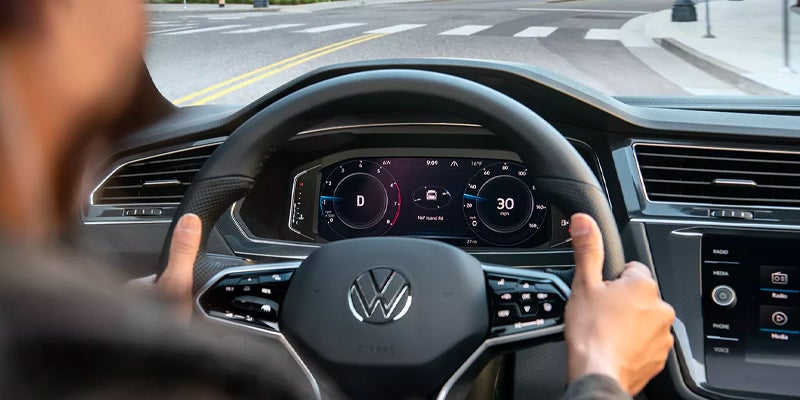
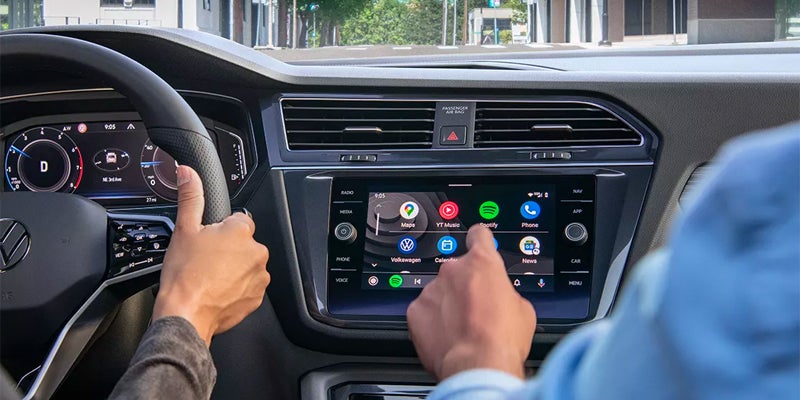
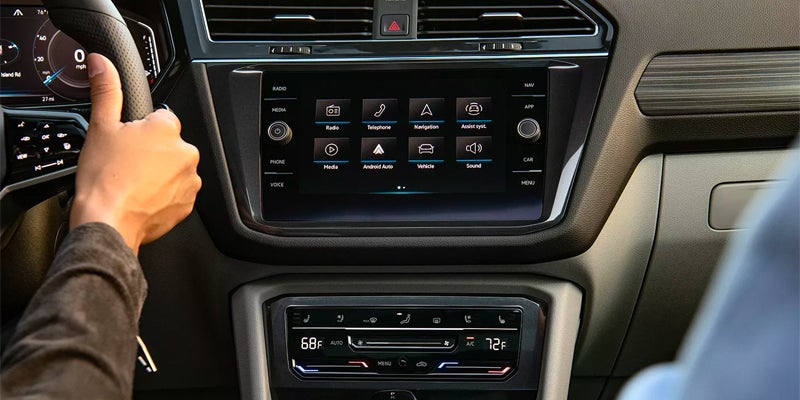
The Tiguan’s standard features include a Digital Cockpit and KESSY® keyless entry. Optional upgrades such as Climatronic® Touch, a steering wheel with touch controls, and a Fender Premium Audio System elevate the driving experience. The Fender system, with its 480-watt, 12-channel amp, offers an arena-sized sound that makes every journey feel like a live concert.
Colors and Trims
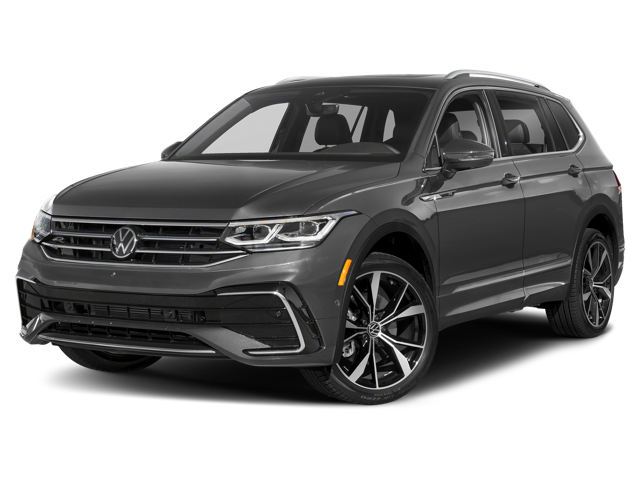
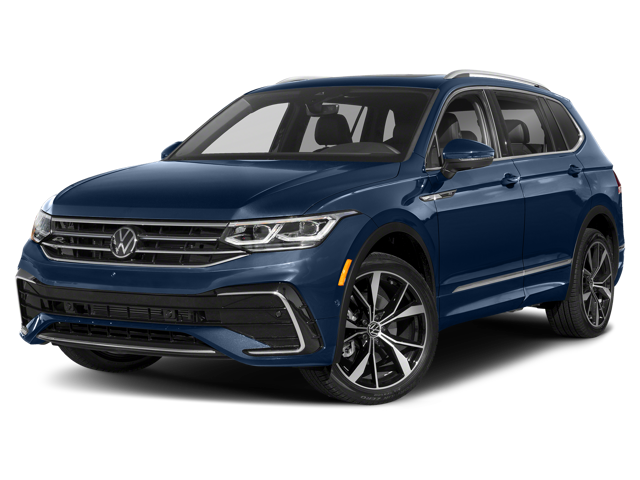
Choose from a variety of vibrant exterior colors like Atlantic Blue Metallic and Kings Red, and interior colors such as Titan Black and Cinnamon. Trim levels include S, SE, SE R-Line Black, and SEL R-Line, catering to different preferences and needs.
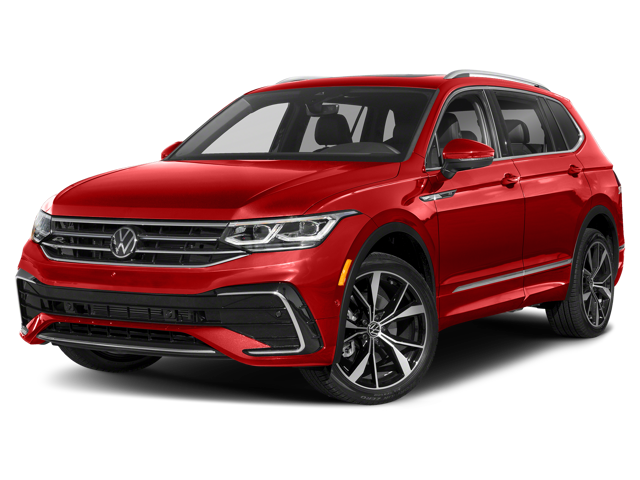
Did you know: That Volkswgen also had a VW Taigun, move a few letters around and you get the Tiguan. The Taigun is a small compact SUV sold in India and Mexico and is also known as the VW T-Coss in Europe. With the names so similar though it’s pretty easy to mix the two of them up!
Safety First
The Volkswagen Tiguan is not just about looks and performance—it’s a safety powerhouse too. It received the 2022 TOP SAFETY PICK+ award from the Insurance Institute for Highway Safety, making it a reliable choice for families.
Conclusion
The Volkswagen Tiguan is a versatile SUV that combines performance, style, and advanced technology, making it a top choice for drivers worldwide. If you’re ready to experience the Tiguan for yourself, visit us at Mankato Volkswagen or contact me at lexie@mankatomotors.com or (507) 344-6984. Let’s make your Volkswagen dreams come true!
Stay tuned for more exciting Volkswagen insights, fun facts, and stories! Happy driving!
About Me: Lexie Marti
Hello, everyone! My name is Lexie Marti, and I’m thrilled to welcome you to my Volkswagen blog. Here, I combine my passion for cars, history, and my love for writing, aiming to share engaging stories, insightful reviews, and a sprinkle of humor with fellow car enthusiasts.
A Little About Me
I’m 32 years old and currently living just outside of New Ulm, MN with my wonderful fiancé/partner in crime, Chris. Our home is a bustling haven, shared with our beloved cats, playful ferrets, and majestic horses. Every day is an adventure in our cozy corner of Minnesota!

My Journey
Interestingly, my professional journey began in a completely different field. I graduated from Le Cordon Bleu College of Culinary Arts with a specialization in Patisseries. For the past several years, I had the privilege of working for the Massad family, where I honed my skills in the delicate art of baking and pastry-making.
Hobbies and Passions
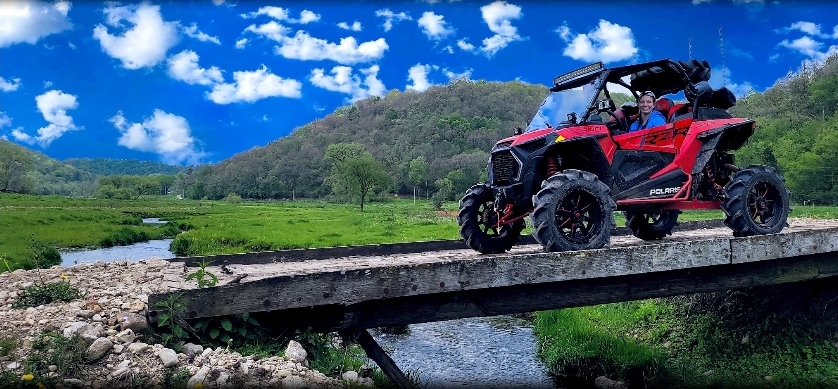
When I’m not diving into the world of Volkswagen, you’ll likely find Chris and I indulging in our shared hobbies. We love hiking, camping, kayaking, and off-roading—anything that gets us out into nature and our adrenaline pumping. Of course, baking remains a passion of mine, and I often find myself whipping up sweet treats for friends and family. Horseback riding is another cherished pastime, offering both relaxation and a deep connection with nature.



Writing and Beyond
Writing has always been a significant part of my life, whether it’s documenting our outdoor adventures, crafting intricate stories, or sharing my insights about Volkswagen vehicles. Currently, I’m also working on my own novel—a project that brings together my love for storytelling and creativity.
Connecting with You
Through this blog, I aim to expand people’s knowledge and perception of the Volkswagen brand, providing content that is both informative and entertaining. I believe that learning about cars should be fun and engaging, and I hope to bring that spirit to every post.

If you have any questions, want to share your own car stories, or just want to say hello, feel free to reach out. You can contact me via email at lexie@mankatomotors.com or give me a call at (507) 344-6984.
Thank you for joining me on this journey. Let’s explore the world of Volkswagen together!
Warm regards,
Lexie Marti
Welcome back, my car enthusiasts! Lexie here, your friendly neighborhood Volkswagen researcher. Today, we’re going on a journey through the history and awesomeness that is the Volkswagen Golf GTI! If you have any questions or just want to chat about cars, you can reach me at lexie@mankatomotors.com or (507) 344-6984. Buckle up, because this ride is going to be fun!
The Birth of an Icon
The original Golf Mk1 was designed to replace the beloved but aging Volkswagen Beetle, for a refreshing new look. Launched in 1974, the Golf Mk1 was a front-engine, front-wheel-drive marvel that quickly became a hit. Since then, the Golf has become Volkswagen’s best-selling model and one of the world’s top three best-selling cars, with over 35 million units sold as of 2019. Initially, most Golfs were three-door hatchbacks, but the lineup expanded to include five-door hatchbacks, estates, convertibles, and even a Golf-based saloon called the Jetta. We will get to all of these in later posts.
Meet the GTI: The “Hot Hatch” That Could
The real star of the show, however, is the Golf GTI. Introduced in 1976, the GTI variant of the Golf turned a practical family car into a high-performance thrill machine. It was the original “hot hatch,” a term that has since become synonymous with sporty hatchbacks. The first GTI hit the scene with a 110 horsepower engine, and it’s been winning hearts (and races) ever since.
Generation Game: The Evolution of the GTI
Let’s take a quick pit stop to look at the evolution of the Golf GTI through its generations:
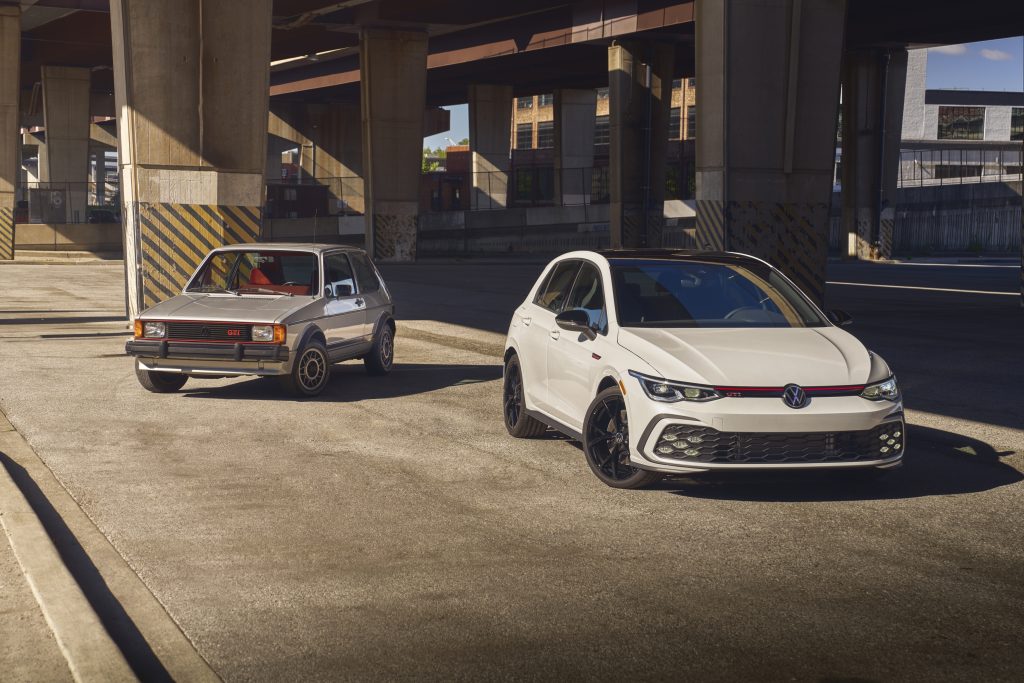
First Generation (1974-1983) – Mk1: The original GTI, known as the Rabbit in the US, the Caribe in Mexico, and the Polo in Europe set the stage with its compact size, sporty feel, and practical design.
Did you know: In the Latin American Market (mostly seen in Brazil) the Golf was called the GOL GTI and the Volkswagen Fox (1987-1993). In South Africa it was known as the Citi Golf from 1984-2009.
Second Generation (1983-1992) – Mk2: Introduced the first generation of 4×4 drive with the Golf Syncro (Europe only).
Fun Fact: Another version of the Golf was called the Scirocco GTI (Mediterranean wind). Produced between 1974-1992 and sold in the North American and European Markets (a third generation 2008-2017 in Europe only).
Third Generation (1991-1997) – Mk3: Brought in innovations like the first turbocharged direct injection diesel engine and the VR6 engine.
Fourth Generation (1997-2003) – Mk4: Introduced the Golf R32, and the VW Lupo (European Market) thus keeping the GTI tradition alive with continued performance and style upgrades.
Fifth Generation (2003-2008) – Mk5: Reintroduced the Rabbit nameplate in the US and featured a turbocharged 2.0-litre engine with 197 hp.
Fun Fact: The City Golf was also introduced into the Canadian Market in 2007 and was in production until 2010.
Sixth Generation (2008-2012) – Mk6: Designed by Walter de’Silva, this generation focused on aerodynamics and fuel efficiency.
Did you Know: That the Golf was originally sold as the Rabbit from the years 2006 to 2009, and then in 2010, Volkswagen brought back the Golf nameplate with the mid-year refresh!
Seventh Generation (2012-2020) – Mk7: Featured the GTI Clubsport and offered a variety of drive systems, including petrol, diesel, CNG, electric, and plug-in hybrid.
Eighth Generation (2020-Present) – Mk8: Continues to thrill with its 2.0-liter TSI® turbocharged engine, producing 241 hp and 273 lb-ft of torque. The GTI 380 celebrates the heritage of the manual transmission, available in its final year of three-pedal production.
Special Editions and Racing Pedigree
Volkswagen knows how to keep the GTI exciting with special editions and racing versions of the GTI:
Rabbit Edition (2019): A limited edition with only 3,000 units made for the US market, featuring unique colors and upgraded features.
Golf GTI TCR (2016-2019): A track-focused version with 330 hp, developed by Volkswagen Motorsport for international competitions.
The 2024 Golf GTI: A Modern Marvel
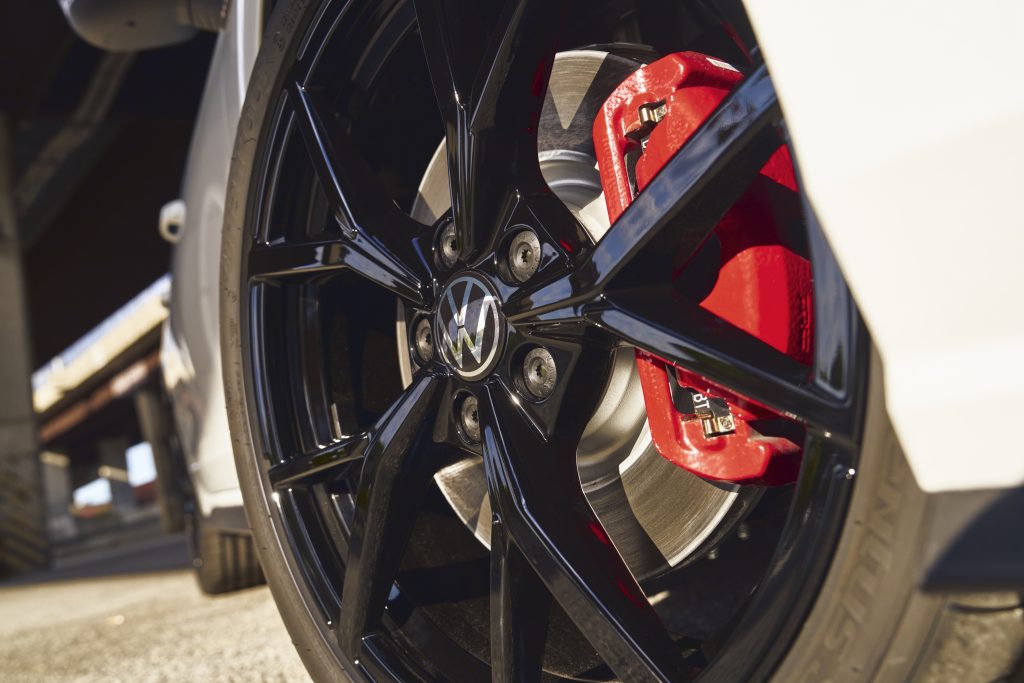
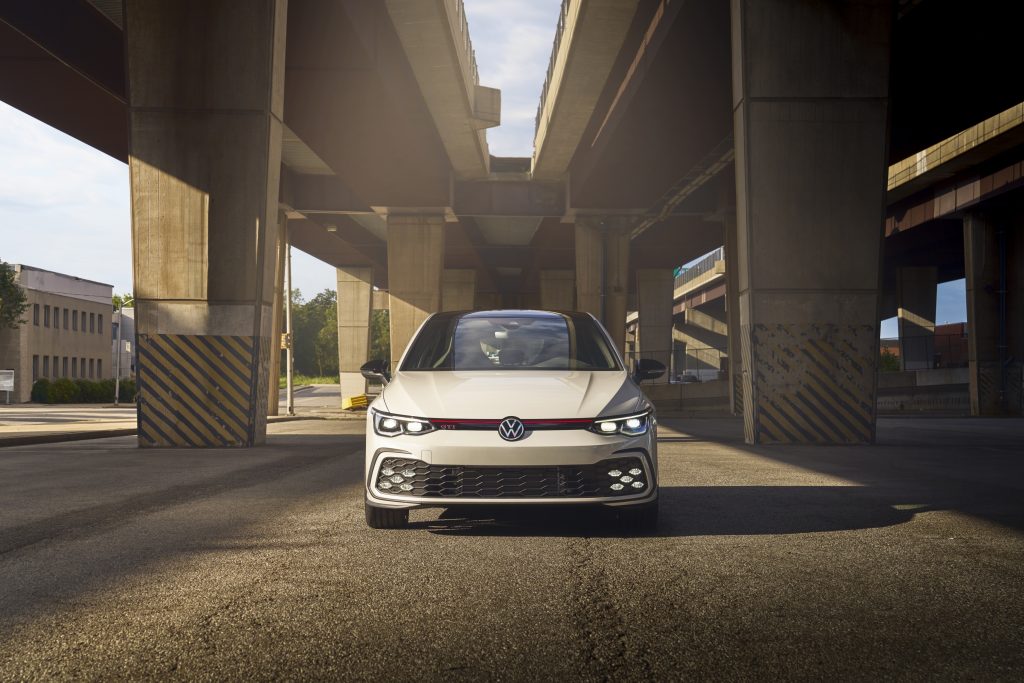
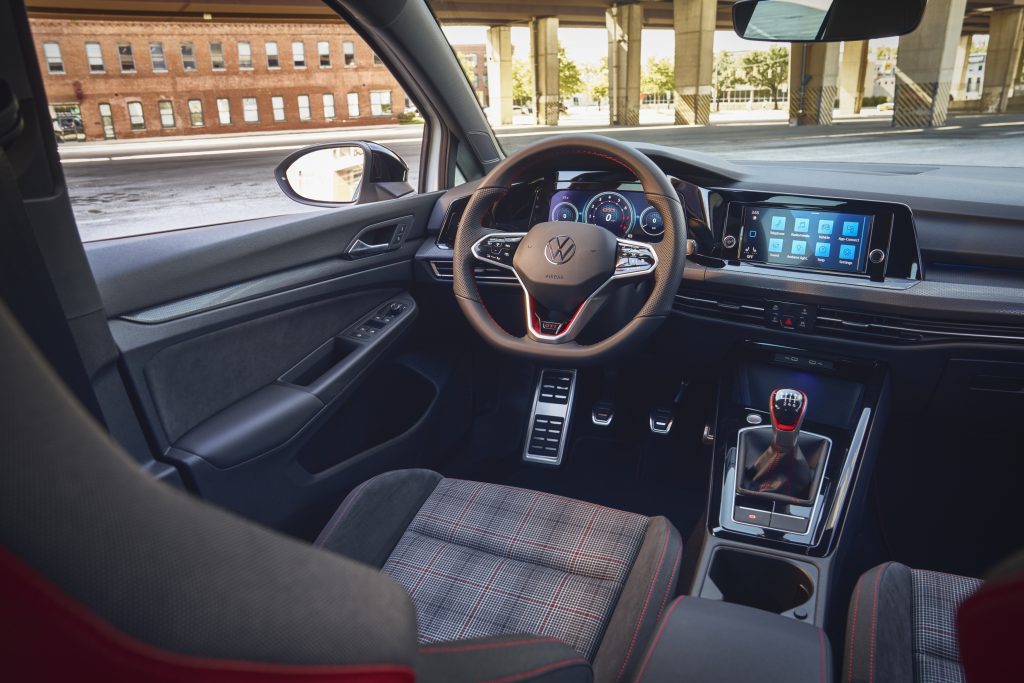
The latest Golf GTI keeps the purist happy while embracing modern technology. The 2024 model is powered by the EA888 2.0-liter engine, producing 241 hp and 273 lb-ft of torque. It comes with a choice of a 6-speed manual or a 7-speed DSG® transmission. Standard features include a torque-sensing limited-slip differential, 10.25-inch Digital Cockpit Pro, touch interfaces, 30-color ambient lighting, and IQ.DRIVE® driver assistance technology.
Fun and Practicality in One Package
The Golf GTI isn’t just about speed; it’s also about comfort and customization. With driving modes like “Comfort,” “Normal,” “Sport,” and “Custom,” you can tailor the driving experience to your liking. Plus, features like ESC Sport and ESC Off modes make it a blast for experienced drivers on closed courses. You could take this one to the races!
Conclusion: A Legacy That Keeps on Giving
From its humble beginnings to its current status as an icon, the Volkswagen Golf GTI has always been about blending practicality with performance. It’s the car that makes every drive exciting, whether you’re heading to the office or tearing up a racetrack.
So, there you have it—a brief (and fun) history of the Volkswagen Golf GTI. If you’re as excited about this car as I am, or if you have any questions, don’t hesitate to reach out. I’m Lexie, and you can contact me at lexie@mankatomotors.com or (507) 344-6984. Happy driving!
Connect with us


Recent Blog Entries
- The Volkswagen ID. Buzz: A Retro Ride Into the Electric Future
- Volkswagen’s Green Revolution: Driving Towards a Sustainable Future
- The Quirky World of Günter Artz: Volkswagen’s Hidden Gem
- The Good, the Bad, and the Ugly, What is a CPO Vehicle?
- Hit the Road with Your Volkswagen: Midwest Adventures Await!